
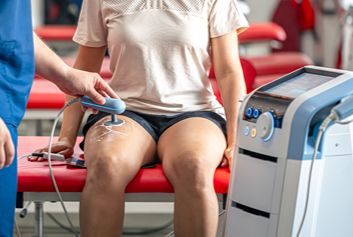
Pain that will not go away is hard to live with. It affects sleep, mood, work, and time with family. It is also very common. Nova Spine and Pain Care notes that approximately 84% of adults will have low back pain at some point in their lives, and that knee pain affects 25 percent of adults.
For most people, an episode of back pain settles on its own. For some it does not. Back pain that goes beyond four weeks is called subacute (four to 12 weeks). If it lasts longer than 12 weeks, it is considered chronic. At that point, many people start asking what else is available beyond rest and medication.
One option that comes up often is radiofrequency ablation. This post explains what it is, which parts of the body it is used for, and where it fits in a step-by-step treatment plan.
What Is Radiofrequency Ablation?
Radiofrequency ablation, or RFA, is an interventional pain procedure. In simple terms, it uses radiofrequency energy to target a nerve that carries pain signals.
At Nova Spine and Pain Care, RFA is one of several procedures offered by Dr. Chitra Ramasubbu and her team. The practice states that its treatments are performed by experienced and well-trained physicians under fluoroscopy or ultrasound guidance. Fluoroscopy is real-time X-ray, and it helps the physician see where the needle is going.
Where Does Nova Spine and Pain Care Offer RFA?
The practice lists RFA in four treatment areas:
- Neck: Cervical Radiofrequency Ablation
- Mid back: Thoracic Radiofrequency Ablation
- Low back: Lumbar Radiofrequency Ablation
- Knee: Genicular Nerve Radiofrequency Ablation
Each one appears next to other options on the same treatment list, such as facet blocks and epidural injections. RFA is one tool among many.
When Is RFA Considered for Chronic Pain?
Timing matters. Nova Spine and Pain Care does not treat procedures as a first step. Dr. Ramasubbu and her team start with a review of symptoms, imaging, and medical history. Care usually begins with conservative measures, and procedures are used when they are genuinely needed.
For low back pain, the practice lists these conservative options:
- Heat
- Massage
- Acupuncture
- Spinal manipulation
- Exercise and physical therapy
Medication, including acetaminophen, anti-inflammatories such as ibuprofen and naproxen, muscle relaxers, and nerve pain medications
If all conservative measures fail, the practice offers several interventional pain procedures based on the cause of the pain. That last part is important. The right procedure depends on where the pain comes from.
1. Low Back Pain
Chronic low back pain is the area where the practice gives the most detail. Its site notes that the risk of low back pain rises for people over 30, and for those with weak abdominal muscles, heavy lifting or bending, scoliosis, or a family history of osteoarthritis. Depression and anxiety are also listed as risk factors.
Lumbar RFA is one of the interventional options offered for low back pain. Others include lumbar facet blocks, epidural injections, and spinal cord stimulation.
One point deserves attention. For the minority of patients with severe weakness and pain, the practice says an urgent evaluation by a neurosurgeon or orthopedic surgeon is indicated.
2. Neck Pain
The practice’s head and neck section describes cervical spondylosis as an age-related condition. It typically appears after the fifth decade of life. It shows up as neck pain with stiffness, and as pain when bending the neck to the side or tilting it back. The pain can spread to the back or behind the ears.
Cervical RFA is listed among the neck and head procedures, along with cervical facet injections and cervical epidural injections.
3. Mid Back Pain
A sore, stiff mid back can interfere with daily functioning. It can keep someone from sleeping or enjoying their usual quality of life. The practice notes that thoracic spondylosis is often age-related.
Thoracic RFA is listed for mid back pain, next to thoracic epidural injections, thoracic facet blocks, trigger point injections, and spinal cord stimulation.
4. Knee Pain
Knee pain has a large effect on daily life. The practice describes osteoarthritis of the knee and hip as a leading cause of pain and disability worldwide. It also states that non-drug approaches should be tried first. These include weight management, exercise, braces, foot orthoses, education, and assistive devices when needed.
Genicular Nerve RFA is one of the knee and hip options the practice performs. Others include intra-articular knee injections, intra-articular hip injections, and Synvisc injections.
How the Care Team Approaches Treatment
Nova Spine and Pain Care describes itself as a physician-led practice with a multimodal approach to chronic pain. Here is what that looks like in practice:
- Each visit starts with a review of symptoms, imaging, and medical history.
- Treatment plans are personalized, not one-size-fits-all.
- Care often combines several approaches, such as procedures, physical therapy, and selective medication.
- Follow-up visits allow the plan to change as symptoms change.
- The stated goal is to reduce opioid consumption and optimize pain control.
Who Performs the Procedures?
Dr. Chitra Ramasubbu is double board-certified in Anesthesiology and Pain Medicine. She completed her Interventional Pain Fellowship at Johns Hopkins School of Medicine and has practiced as a pain specialist in the Atlanta area for more than 10 years. She has also authored several textbook chapters on pharmacotherapy and interventional pain.
Quick Answers to Common Questions
- What is radiofrequency ablation?
It is an interventional pain procedure that uses radiofrequency energy to target a nerve carrying pain signals.
- What areas does Nova Spine and Pain Care treat with RFA?
The neck (cervical), mid back (thoracic), low back (lumbar), and knee (genicular nerve).
- Is RFA the first treatment for chronic pain?
No, the practice starts with conservative care and moves to interventional procedures when those measures fall short.
- How is the procedure guided?
Treatments are performed under fluoroscopy or ultrasound guidance.
- Where can I be seen?
The practice has offices in Canton, Alpharetta, and Lawrenceville, Georgia. It also serves patients from Woodstock, Marietta, Cumming, Sandy Springs, Jasper, Blue Ridge, Roswell, and Milton. Please call to confirm which office is best for your visit.
Summary
Radiofrequency ablation is one of the interventional options for chronic pain in the neck, mid back, low back, and knee. It is not usually where care begins. At Nova Spine and Pain Care, treatment starts with a full review and conservative measures. Procedures come next, when they are needed and based on the cause of the pain.
If pain has lasted for weeks and is getting in the way of daily life, a consultation is a sensible next step. Dr. Chitra Ramasubbu and her team can help you understand your options.
Schedule a Consultation
- Call: (770) 450-4807
- Email: info@novaspineandpain.com
- Canton: 145 Riverstone Terrace, Suite 101, Canton, GA 30114
- Alpharetta: 3905 Brookside Pkwy, Suite 203, Alpharetta, GA 30022
- Lawrenceville: 600 Professional Drive, Suite 170, Lawrenceville, GA 30046
- Office hours: Monday to Friday, 8:00 am to 4:00 pm
Disclaimer: This blog is for informational purposes only and is not a substitute for a medical evaluation. Please consult Dr. Chitra Ramasubbu or a qualified pain specialist to determine the right treatment for your condition.