
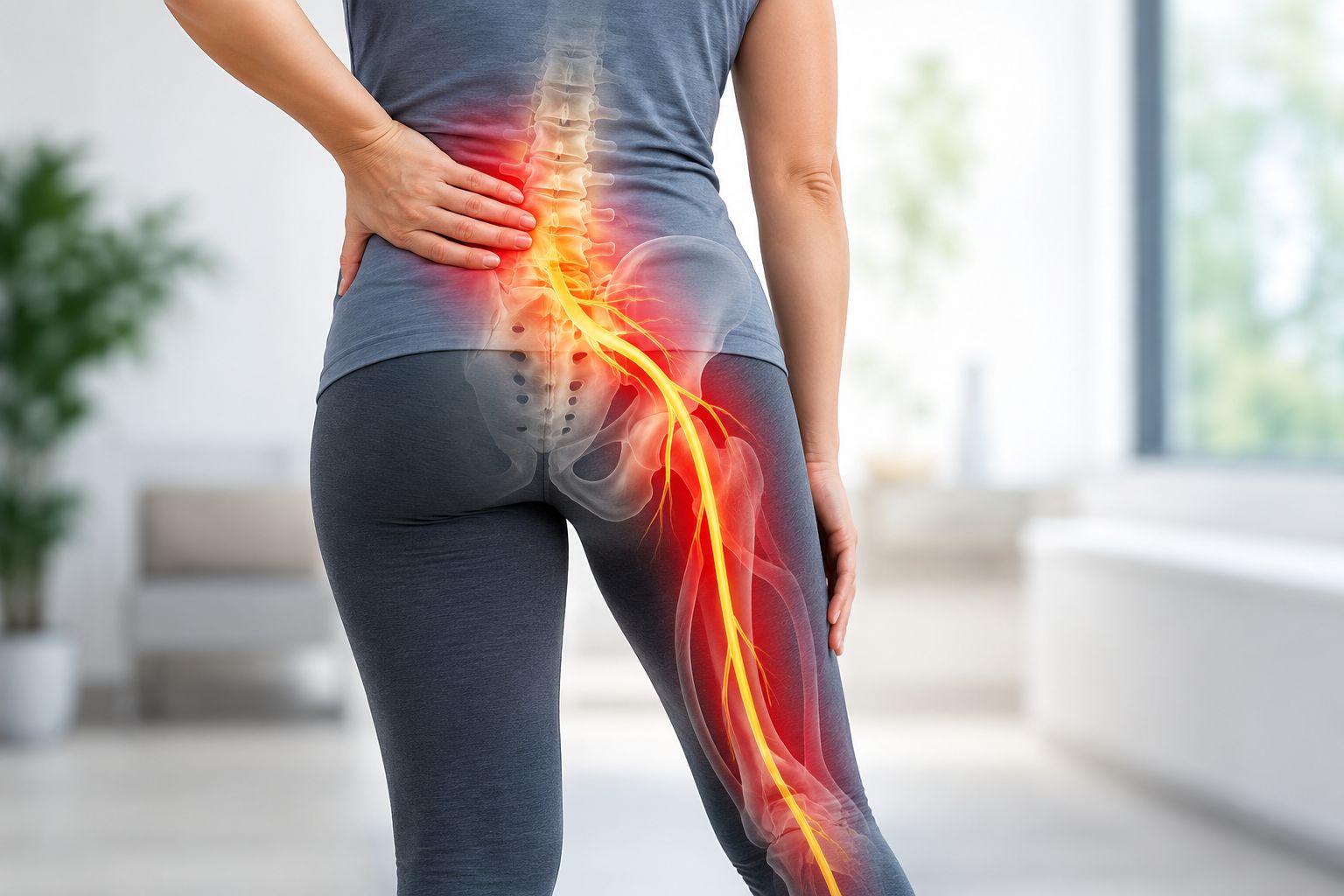
Back pain is one of the most common health complaints. Most episodes improve with time and conservative care, but some pain persists, disrupts sleep, and makes everyday activities difficult.
Sciatica is one possible reason. It commonly causes pain that travels from the lower back or buttock into the leg, sometimes accompanied by tingling, numbness, or weakness.
Understanding the symptoms, potential causes, and available treatments can help you decide when to seek professional care.
What Is Sciatica?
Sciatica refers to symptoms associated with irritation or compression of nerve roots that contribute to the sciatic nerve. Symptoms often affect one side of the body and may extend down the leg.
At Nova Spine and Pain Care, the team reviews your symptoms, medical history, and available imaging before recommending an individualized treatment plan.
Several conditions can produce similar symptoms, including herniated discs, spinal stenosis, degenerative disc disease, and lumbar radiculopathy. A thorough evaluation helps determine the underlying cause.
Signs That Deserve Attention
Sciatica symptoms vary in intensity and duration. Consider seeking medical evaluation when:
-
Pain interferes with work, sleep, or daily activities.
-
Symptoms continue for several weeks without meaningful improvement.
-
Pain persists despite activity modification, physical therapy, or medication.
-
Numbness, tingling, or weakness develops in the affected leg.
Seek emergency medical care for new bladder or bowel control problems, numbness around the groin or saddle area, or severe or rapidly worsening leg weakness.
What Causes Sciatica?
Several spinal conditions may irritate or compress the nerve roots responsible for sciatic symptoms.
Herniated discs: A disc can bulge or rupture, allowing disc material to irritate a nearby spinal nerve. Learn more about [herniated disc symptoms and treatment — internal link to verify].
Spinal stenosis: Narrowing of the spinal canal or spaces around spinal nerves can contribute to leg pain, numbness, or weakness, particularly during standing or walking.
Degenerative disc disease: Age-related disc changes can contribute to back pain and, in some cases, nerve irritation.
Sacroiliac joint dysfunction and piriformis-related pain may also produce symptoms resembling sciatica. Because these conditions can require different approaches, identifying the pain source is important.
Risk Factors for Low Back Pain
Several factors may increase the likelihood of developing low back pain, including excess body weight, weak core muscles, repetitive heavy lifting, certain spinal conditions, and age-related changes.
However, risk factors do not necessarily mean someone will develop sciatica. A clinical assessment helps distinguish ordinary lower back pain from nerve-related symptoms.
How Sciatica Treatment Usually Progresses
Treatment depends on the severity of symptoms, their underlying cause, and how they affect everyday functioning.
Many patients begin with conservative measures, such as remaining gently active, physical therapy, heat, and appropriate medications.
When symptoms persist, a pain specialist may consider additional options.
Interventional Pain Management
For selected patients, image-guided procedures may help manage pain and improve function.
These may include lumbar epidural steroid injections, targeted nerve-related procedures, or other treatments based on the clinical findings.
Patients exploring procedural care can read more about [epidural steroid injections — internal link to verify].
Not every procedure is appropriate for sciatica, and treatment recommendations should reflect the specific diagnosis rather than relying on a standard list of injections.
Nova Spine and Pain Care also uses a multimodal approach that may combine interventional treatments, noninvasive therapies, medication management, and appropriate referrals.
When to See a Spine Specialist
Consider scheduling an evaluation when pain lasts longer than several weeks, conservative treatments provide insufficient relief, or symptoms interfere with normal activities.
A specialist can review whether the symptoms are related to a spinal nerve, another musculoskeletal condition, or a different underlying problem.
If you have persistent nerve-related leg pain, you can explore [pain management services — internal link to verify] to understand the types of care available.
Severe or progressive neurological symptoms require urgent evaluation rather than a routine appointment.
What to Expect at Your First Visit
Your first visit typically includes a discussion of your medical history, current symptoms, previous treatments, and relevant imaging.
The provider performs a clinical examination and explains which treatment options may be appropriate.
For your appointment, bring your identification, insurance information, current medication list, relevant imaging reports, and other available medical records.
The practice’s supplied appointment guidance lists approximately 30 minutes for new patient visits, although scheduling details should be confirmed directly with the office.
Who You Will See
Nova Spine and Pain Care is a physician-led practice.
Dr. Chitra Ramasubbu is double board-certified in Anesthesiology and Pain Medicine and completed an Interventional Pain Fellowship at Johns Hopkins School of Medicine.
Jessica Membrillo, ACNP, is also part of the care team.
The practice emphasizes personalized treatment planning and helping patients improve their daily functioning.
Our Approach to Care
Sciatica treatment is not the same for everyone.
Some patients improve with conservative measures, while others benefit from additional diagnostic evaluation or targeted interventions.
Nova Spine and Pain Care focuses on identifying the likely pain source, discussing available options, and developing a plan suited to each patient’s condition and goals.
Sciatica can cause radiating leg pain, numbness, tingling, and sometimes weakness. Herniated discs, spinal stenosis, and other spinal changes are among its possible causes.
Many cases improve with conservative treatment. Persistent symptoms may benefit from specialist evaluation and individualized pain management.
Recognizing warning signs and seeking appropriate care can help patients make informed treatment decisions.
Book an Appointment
For an evaluation, contact Nova Spine and Pain Care.
Phone: (770) 450-4807
Email: info@novaspineandpain.com
Office locations:
-
Canton: 145 Riverstone Terrace, Suite 101, Canton, GA 30114
-
Alpharetta: 3905 Brookside Pkwy, Suite 203, Alpharetta, GA 30022
-
Lawrenceville: 600 Professional Drive, Suite 170, Lawrenceville, GA 30046
This article provides general educational information and is not a substitute for personalized medical advice.